September 29, 2026
Major Arcana vs. Minor Arcana: Key Differences and How to Read Them
22 Majors, 56 Minors: learn what separates archetypes from everyday cards, how suits and numbers work, and how to read the mix.
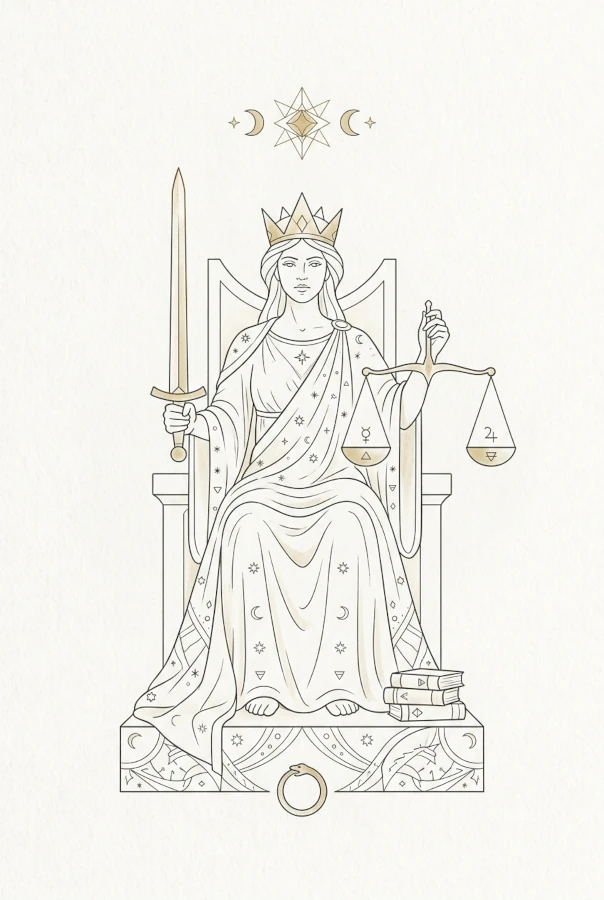
The 78-card tarot deck divides into two clear halves: the 22 Major Arcana and the 56 Minor Arcana. That single split shapes every reading you will ever do. The Major Arcana runs from The Fool (0) to The World (21), while the Minor Arcana splits into four suits — Wands, Cups, Swords, and Pentacles — each with fourteen cards. Understanding the difference is the first real milestone in reading tarot with confidence.
Why Beginners Feel the Difference Immediately
Majors feel like fate. When one appears, it signals a big chapter, a turning point, or a lesson with weight behind it. Minors feel like daily life: a conversation, a mood, a task, a small choice that adds up. One card says your whole path is shifting; the other says this is what Tuesday looks like.
The Payoff of Learning the Split
Once you know which half you are reading, interpretation gets faster and spreads make more sense. You can tell at a glance whether a reading is speaking to destiny or to detail — and you will know when a card is loud (a Major demanding attention) versus quiet (a Minor offering context). That awareness alone will sharpen every reading you give.
What the Major Arcana Actually Are
The Major Arcana are the 22 cards numbered from The Fool (0) through The World (XXI). Historically, they were called “trumps”—a term borrowed from card games—because they outrank every other card in the deck. That hierarchy is the heart of the major arcana vs minor arcana distinction: when a Major Arcana card appears in a reading, it signals that something larger than daily life is at work.
Archetypes, Not Errands
Where the Minor Arcana describe everyday events, moods, and interactions, the Major Arcana embody archetypal forces and karmic lessons. They mark turning points: a calling (The Magician), a reckoning (Justice), a dissolution (The Tower), a homecoming (The World). These are not things you do; they are things that happen to your soul’s storyline.
The Fool’s Journey
The classic thread connecting all 22 cards is the Fool’s Journey. In Rider-Waite-Smith order, The Fool sets out, meets teachers and trials, descends into the underworld, and emerges transformed in The World. Read as a sequence, the Major Arcana map a complete initiation—which is why a spread dominated by them often points to fate, destiny, or a chapter of profound growth rather than passing circumstance.
What the Minor Arcana Actually Are
In any discussion of major arcana vs minor arcana, it helps to start with what the Minor Arcana actually are. Strip away the mystique and you find 56 cards: four suits of 14, each running Ace through Ten, plus four court cards (Page, Knight, Queen, King). That structure covers the whole deck minus the 22 majors.
Where the majors speak in archetypes and life lessons, the Minors map to ordinary experience. Pentacles handle money, work, and the body. Cups cover relationships and emotion. Swords deal with thoughts, conflicts, and hard truths. Wands carry drive, creativity, and momentum. A single Minor can flag a tense coworker, a small win, a mood shift, or a budget worry without reaching for destiny.
Where Most Readings Live
This is also why the Minor Arcana is where most of a daily or weekly reading lives. Pull one card for your Tuesday and you’ll almost always get a Minor. Ask how to handle a decision and the Minors give you a practical next step, not a sweeping theme.
For beginners, that makes the Minors worth learning early. They show up most often, so recognizing them keeps you fluent in the everyday questions people actually bring to a reading.
The Four Suits and What They Rule
In the major arcana vs minor arcana divide, the major cards speak of soul-level lessons, while the minor arcana maps everyday life — and that map is drawn in four suits. Each suit rules a domain, and its element tells you how that domain operates.
Wands — Fire: Action, Ambition
Wands govern drive, creativity, and enterprise. In Rider-Waite imagery, wands sprout fresh leaves, signaling living energy ready to grow. Draw a Wand and the question is about doing, daring, and momentum.
Cups — Water: Emotion, Relationships
Cups rule feelings, love, intuition, and connection. The Ace shows a cup overflowing with five streams — emotion that spills beyond the container. Cups ask how you feel and whom you love.
Swords — Air: Thoughts, Conflict
Swords cover the mind: ideas, truth, communication, and strife. The Ace depicts a sword raised in a crowned hand, clarity cutting through confusion. Swords reveal what you think — and what you fight about.
Pentacles — Earth: Money, Body, Work
Pentacles address the material world: finances, health, career, home. The Ace shows a pentacle held in an open palm, tangible and real. Pentacles ask what you can build, earn, or touch.
Read suit plus number and meaning lands fast. The Five of Cups is loss in the emotional realm; the Five of Pentacles is loss in the material realm — one grieves, one goes broke. Suit sets the stage; number sets the plot.
Numbers, Courts, and the Minor Arcana’s Hidden Structure
When people compare the major arcana vs minor arcana, they often treat the majors as the “real” journey and the minors as a deck of everyday footnotes. But the minors have a structure every bit as deliberate.
The Ace-to-Ten Story Arc
In each suit, the numbered cards follow a mini story: the Ace is a spark of pure potential; the Two is the first choice or balancing act; the Three is early growth and collaboration; the Four brings stability—sometimes stagnation; the Five disrupts it with conflict or loss; the Six offers recovery and rebalancing; the Seven tests us with strategy and persistence; the Eight demands mastery through effort; the Nine nears fulfillment, often with weariness; the Ten completes the cycle, for better or worse. Four suits, four variations on one arc.
The Courts as People and Stages
The Page, Knight, Queen, and King work as personalities, roles in a situation, or stages of maturity—student, seeker, adept, master. They are not fixed individuals but energies anyone can inhabit.
Mirrored Journeys
Here is the hidden symmetry: ten numbered steps plus four court figures mirror the majors’ own path from innocence (The Fool) to mastery (The World). The difference is scope. The majors trace one soul’s grand initiation; the minors trace that same arc, over and over, across the ordinary arenas of emotion, thought, action, and material life. Same journey, smaller canvas—and that is precisely their power.
Major Arcana vs Minor Arcana: Side-by-Side Differences
The tarot deck divides into two distinct halves, and understanding how they differ sharpens every reading you give or receive.
Scope: Soul Lessons vs. Daily Life
The Major Arcana—22 cards from The Fool to The World—speak to life themes and soul lessons. When The Hierophant or The Tower appears, the cards are addressing questions of identity, belief, and destiny. The Minor Arcana—56 cards across four suits—speak to situations, habits, and day-to-day decisions. A Three of Pentacles is about collaboration at work; a Five of Cups is about processing a disappointment.
Imagery: Grand Figures vs. Ordinary Scenes
Majors use grand symbolic figures and archetypal events—judgment, death, rebirth. Minors show ordinary people doing ordinary things: planting gardens, carrying swords, raising cups. The visual language mirrors the scope.
Weight in a Reading: Destiny vs. Manageability
A spread full of Majors signals destiny-level change—forces larger than personal effort. A spread full of Minors signals manageable, practical matters within your control. Most real readings blend both, showing how everyday choices connect to a larger arc.
How the Split Changes the Way You Read a Spread
Before you interpret a single card, count. Scan the spread and tally how many cards come from the Major Arcana versus the Minor Arcana. This thirty-second step reframes everything that follows.
The Threshold Rule
If mostly Majors appear, the reading points to a turning point — fate, destiny, or a lesson larger than daily logistics. The querent is being moved, not merely managing. If mostly Minors, the situation sits in ordinary hands: habits, choices, conversations, routines. The querent has more control than they think.
Applying It
Three-card past/present/future: Two or three Majors suggest a life chapter unfolding on schedule, not a random Tuesday. All Minors? Ground the advice in concrete next steps.
Celtic Cross: With ten cards, five or more Majors signals a karmic hinge — read the Minors as how the querent navigates it. Mostly Minors means the “outcome” is still negotiable.
Daily one-card pull: A Major asks for reflection; a Minor asks for action.
Why It Works
Majors are few — twenty-two against fifty-six — so they cluster deliberately. Counting first keeps you from overreading a Minor as fate or underreading a Major as trivia. Let the ratio set the tone; let the individual cards fill it in.
Where Beginners Get Confused (and How to Fix It)
Nearly every new reader runs into the same tangle: Majors feel important, Minors feel like filler. That instinct is understandable — 22 dramatic archetypes versus 56 busy little scene cards — but it leads beginners straight into three common traps.
Trap 1: Believing the Minors “don’t matter”
The opposite is true. In most real readings, the Minor Arcana carries the actionable guidance: what to do Monday morning, which conversation to have, where the money is leaking. Majors describe the chapter; Minors describe the paragraph you’re actually living in.
Trap 2: Reading court cards as literal people, Majors as literal fate
Court cards are not always a person — often they’re a mood, a role you’re playing, or the energy a situation demands. Likewise, the Major Arcana is not a fixed destiny. The Tower doesn’t promise disaster; it describes upheaval already in motion. Treat both as energies, and ask: “Who or what does this resemble right now?”
Trap 3: Memorizing 78 meanings raw
This is the fastest route to burnout. Learn the Major Arcana story first — the Fool’s Journey — as one continuous narrative. Then approach the Minors by number and suit logic: Aces begin, Fives disrupt, Tens culminate; Cups feel, Swords think, Wands act, Pentacles build. Two frameworks beat seventy-eight flashcards.
Learn the plot before the footnotes, and the confusion dissolves.
A Practical Study Plan for Learning Both
The distinction between the major arcana and minor arcana becomes intuitive only through structured repetition. Rather than memorizing all 78 cards at once, sequence your study in two clear phases.
Phase One: The 22 Majors
Begin with the major arcana in Fool’s Journey order, from The Fool (0) through The World (XXI). This narrative arc gives each card a context, making abstract archetypes like Death or Temperance easier to retain. Spend two to three days per card before moving on.
Phase Two: The Minors, Suit by Suit
Learn one suit at a time—Wands, Cups, Swords, then Pentacles—working Ace through Ten to understand the numerical arc within each element. Add the court cards only after the numbered minors feel familiar.
Daily Practice
Draw one card each morning, alternating between major and minor arcana. This deliberate rhythm trains you to recognize the visual and energetic difference between a “big” archetypal card and an “everyday” situational one.
Journaling
Record every draw with three notes: the suit (or Major), the number, and whether the card felt “big” or “everyday” in your reading. This habit builds intuition alongside book meanings, teaching you to feel the major arcana versus minor arcana distinction rather than merely recite it.
Major Arcana vs Minor Arcana FAQ
How many cards are in each group, and why does the deck total 78?
The Major Arcana contains 22 cards, numbered 0 through 21, beginning with The Fool and ending with The World. The Minor Arcana contains the remaining 56 cards: four suits (Wands, Cups, Swords, Pentacles) of 14 cards each, made up of ten numbered cards plus four court cards. Add 22 and 56 and you get the standard 78-card tarot deck. The split reflects two layers of experience: the Majors map life’s big themes and turning points, while the Minors map the everyday events, moods, and choices that fill the space between them.
Can a reading be all Majors or all Minors—and what does each pattern mean?
Yes, both happen. An all-Major spread is rare and tends to signal a pivotal, fated-feeling chapter—events with weight and lasting consequence. An all-Minor spread is common and usually points to daily life: practical matters, routines, and short-term situations rather than destiny-level shifts.
Which should a beginner learn first—and are Majors “stronger” than Minors?
Start with the 22 Majors. They’re a manageable set, rich in story, and built around universal archetypes that are easy to remember. But “stronger” isn’t automatic. A Major speaks to significance, not intensity; four Aces or a tense Swords sequence can land harder than a single Major. Read the pattern, not just the rank.