September 28, 2026
3-Card Spreads
Three cards, one clear question: master the classic Past-Present-Future spread plus five more layouts, and read them as one story.
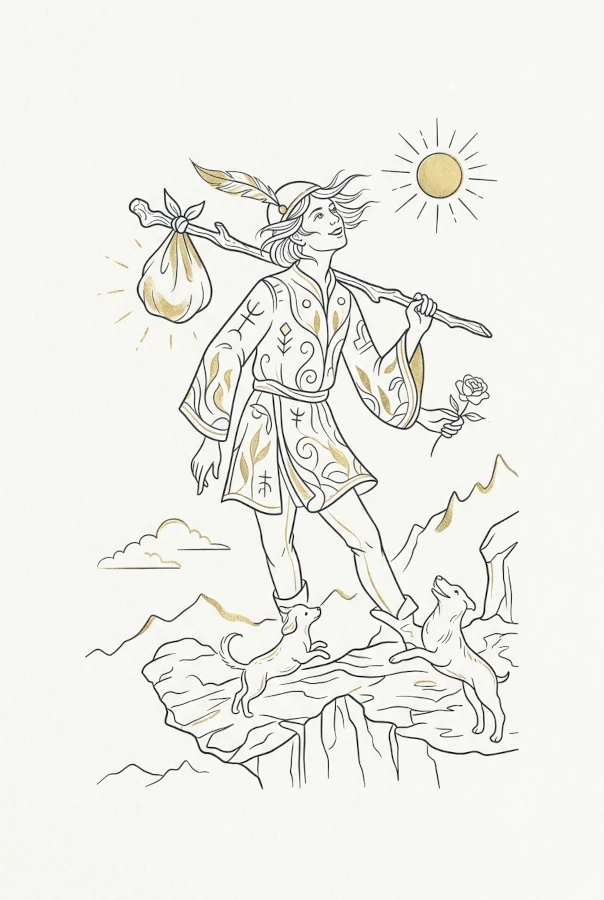
The 3 card tarot spread is the fastest bridge between a single-card snapshot and a full ten-card story. Where one card offers a glance and the Celtic Cross demands an hour, three cards deliver a complete arc in minutes — which is why it remains the go-to structure for daily pulls, quick decisions, and readings on the fly.
The Classic Structure
Most readers begin with Past-Present-Future. The first card shows what led here, the second what is happening now, and the third what is likely to unfold if nothing changes.
Rider-Waite-Smith imagery makes each position instantly readable. Place The Fool in the present and you see someone stepping off a cliff, eyes on the sky — optimistic, untethered, one stride from a fall. Move that same card to the future and the message shifts: a leap is coming, ready or not. One symbol, three possible anchors.
One Question, Not Three
The mindset shift matters more than the layout. Three cards answer one clear question, not three separate ones. If you ask about love, money, and career at once, you get a muddle. Ask instead, “What do I need to understand about this decision?” — and let the three cards speak as a single sentence.
Why Three Cards Beat One Card and Ten Cards
A 3 card tarot spread sits at the sweet spot of the reading spectrum. One card gives you a keyword — useful, but thin. Ten cards give you a saga — rich, but easy to drown in. Three cards give you a narrative: a beginning, a middle, and an end. That structure is why the three-card spread remains the most taught, most journaled, and most trusted layout in tarot.
Practical Benefits for Beginners
Three cards are simply easier to learn from. You can hold three meanings in your head at once, see how they interact, and still remember the reading an hour later. Journaling a three-card pull takes five minutes; journaling a Celtic Cross takes thirty. That low friction means you actually practice, and practice is what builds intuition.
Why Professionals Still Default to Three
Ask most working readers what they pull for a client question, and they’ll tell you: three cards. Not because they can’t handle more, but because three cards force focus. A ten-card spread lets a querent hide inside the noise. A single card can feel too blunt. Three cards keep the reading locked on the actual question — past, present, and likely outcome, or situation, action, and result.
The Takeaway
One card is a whisper. Ten cards are a lecture. Three cards are a conversation — and that’s usually exactly what the querent came for.
The Anatomy of a Three Card Reading: How Positions Create Meaning
A three card tarot spread doesn’t create meaning through the cards alone. It creates meaning through position. The same card can say entirely different things depending on where it lands. The Tower in an “advice” slot might urge you to dismantle something before it collapses on its own. The Tower in an “outcome” slot usually means the collapse is already underway. Same card, opposite emotional temperature.
That’s why you must lock your spread definition before shuffling. Decide exactly what Position 1, 2, and 3 mean — Past/Present/Future, Situation/Action/Outcome, or whatever structure you choose — and commit to it. If you leave the definitions loose, you will unconsciously reinterpret positions to fit the answer you want. That’s not reading tarot; that’s negotiating with it.
Reading the Three as One Sentence
The real skill is reading the three positions as a single grammatical unit. Position 1 is the subject. Position 2 is the verb or condition. Position 3 is the result. If the sentence doesn’t cohere, you’ve likely misassigned a position.
Sample reading — Situation / Action / Outcome:
- Situation: Eight of Swords
- Action: Ace of Cups
- Outcome: Two of Wands
Read together: “You feel trapped by a problem you believe you can’t escape (Eight of Swords), so the move is to lead with emotional openness rather than force (Ace of Cups) — which restores your sense of choice and opens a new direction (Two of Wands).”
One sentence. One story. Lock the positions first, and the cards will write it for you.
Past, Present, Future: The Classic Spread and Its Variations
The 3 card tarot spread in its Past, Present, Future form is where most readers begin — and where many never leave, because it works. But each position deserves a closer look.
The Positions, Card by Card
- Past covers roots, not just chronology: the recent event, inherited pattern, or old choice that shaped this moment.
- Present captures current energy and the querent’s agency — the moving part of the reading, where choices actually live.
- Future shows a likely trajectory, not a verdict. Treat it as a weather forecast: useful, honest, and changeable. The querent can pack an umbrella.
Variations to Swap In
Tired labels? Try:
- Situation – Action – Outcome for practical questions.
- You – The Other Person – The Relationship for partnerships.
- What Helps – What Hinders – What’s Hidden for shadow work.
The three-card structure is versatile; the labels are the lens. Choose the one that matches the question, and the same spread reads fresh every time.
Situation, Action, Outcome: The Decision-Making Spread
When you are staring down a concrete choice — a job offer, a relationship crossroads, a move across the country — the classic 3 card tarot spread becomes a decision-making tool rather than a fortune-telling one. Read the cards as Situation, Action, Outcome, and you get a clear, practical arc.
Situation
This first card shows the honest current situation, not the wishful version. It is the ground you are actually standing on: what is really happening, what you may be avoiding, and the facts beneath the feelings. If it feels uncomfortable, that is often the signal it is telling the truth.
Action
The second card reveals the most aligned action or attitude — not necessarily the easiest, but the one that fits who you are becoming. It might counsel patience, a direct conversation, or walking away. Treat it as guidance, not a command.
Outcome
The third card shows the likely result if you take that action. It is a trajectory, not a verdict — a consequence of the path you choose, which can shift if you shift.
The quiet power of this 3 card tarot spread is that it returns agency to you. Instead of waiting for fate to speak, you see your position, your best move, and where it leads. The decision stays in your hands.
Mind, Body, Spirit: The Holistic Check-In Spread
The 3 card tarot spread is often taught as past, present, and future—but there’s a gentler way to read three cards that treats the tarot as a mirror for your wellbeing rather than a crystal ball. The Mind, Body, Spirit check-in is less about prediction and more about presence.
The Three Positions
Mind — what’s occupying your thoughts. This card surfaces the dominant narrative running in your head. Draw the Four of Cups and you may see rumination: the figure rejecting the offered cup is you, turning away from support that’s already there.
Body — your physical and energetic reality. This card reflects somatic signals, sleep, tension, depletion. The Nine of Pentacles suggests grounded self-sufficiency—a body that’s had rest and nourishment. Its reversal can flag burnout before you consciously feel it.
Spirit — what your intuition is asking for. This is the soul’s need, not your to-do list. It might call for solitude, ritual, or simply honesty about what you value.
How to Use It
Shuffle while naming the three arenas aloud. Lay one card for each. Read them as a conversation: does the Mind card argue with the Body card? Does Spirit offer a resolution? This 3 card tarot spread works beautifully at the New Moon, during anxious seasons, or whenever you feel “off” but can’t say why. It won’t tell you what will happen—it tells you what’s already true.
You, Them, the Relationship: The Two-Person Spread
Most three card readings describe a situation or a timeline. This one describes a bond. It is the 3 card tarot spread to reach for when a partnership, friendship, or working relationship needs clarity — when you must hold your own perspective, another person’s position, and the connection between you all at once.
How the Layout Works
- Card One — You: your position, energy, and what you bring to the dynamic.
- Card Two — Them: the other person’s stance, priorities, and current season.
- Card Three — The Relationship: the bond itself, treated as a living third entity with its own needs and trajectory.
That third card is the heart of the spread. A relationship is not simply two people added together; it has its own weather, history, and momentum. Card three shows what the connection is asking for — more honesty, more space, a shared project, or an honest ending.
Reading It Ethically
This spread maps two perspectives, but it is not a surveillance tool. Do not use it to spy on someone’s private feelings or to bypass a conversation you could simply have. Keep the reading anchored to your experience: What is your part in this? What can you actually influence? The cards can deepen empathy, but they cannot consent on anyone’s behalf.
Best for: couples, cofounders, close friendships, and any dynamic where two people share something worth tending.
How to Read the Three Cards as One Story, Not Three Definitions
A 3 card tarot spread only comes alive when you stop reading three separate cards and start reading one unfolding sentence. Instead of asking “What does the Five of Cups mean?” ask “What is this trio saying together?”
Spot the patterns first
Scan for repeated suits, numbers, or symbols. Three Wands cards point to action and will; two Major Arcana suggest fate is steering events. Repeating numbers (say, two Fives) flag a core tension. These echoes reveal the reading’s real theme before you interpret a single card.
Build one narrative sentence
Treat the cards as subject, verb, and outcome. The first card sets the scene, the middle complicates or connects, the last resolves or reveals. Say it aloud as one flowing sentence rather than three definitions. Awkward joins usually mean you’ve missed a link.
Find the pivot card
One card usually carries the emotional or directional weight—often the middle, but sometimes a Major Arcana or the only reversed card. That’s your pivot. It tells you which way the story is turning.
Example
Three cards: Eight of Cups, Three of Swords, The Star.
Read as definitions: “walking away, heartbreak, hope.” Flat.
Read as a story: You leave something behind, move through genuine grief, and that departure is what finally opens the door to healing. The Three of Swords is the pivot—the pain is the hinge, not the ending. Same three cards, one clear message.
Choosing the Right Spread for Your Question
Every 3 card tarot spread works best when the positions match the shape of your question. Before you shuffle, ask yourself what kind of answer you actually need.
Match the Spread to the Question Type
- Predictive questions (“What’s coming?”) suit Past–Present–Future, which traces a timeline and shows how momentum is building.
- Choice questions (“Should I take the job?”) suit Situation–Action–Outcome, which clarifies where you stand, what to do, and where it leads.
- Wellbeing questions (“Why am I so drained?”) suit Mind–Body–Spirit, which separates mental, physical, and energetic factors.
Rephrase Vague Questions
Spread-compatible questions are open, specific, and about you. “What does he think of me?” is unanswerable in three cards—you can’t verify his inner world. Rephrase it: “What should I understand about this connection?” or “What do I need to know about my part in this relationship?” Now the cards have somewhere to land.
The Real Rule
Any variation works if your question is clear and your positions are locked before you deal. Decide what card one, two, and three each mean, then don’t move the goalposts mid-reading. A precise question with consistent positions beats the “perfect” spread every time.