November 10, 2026
Celtic Cross: Obstacle vs Outcome
The two cards readers confuse most: obstacle (position 2) and outcome (position 10). How they differ, and what it means when they contradict.
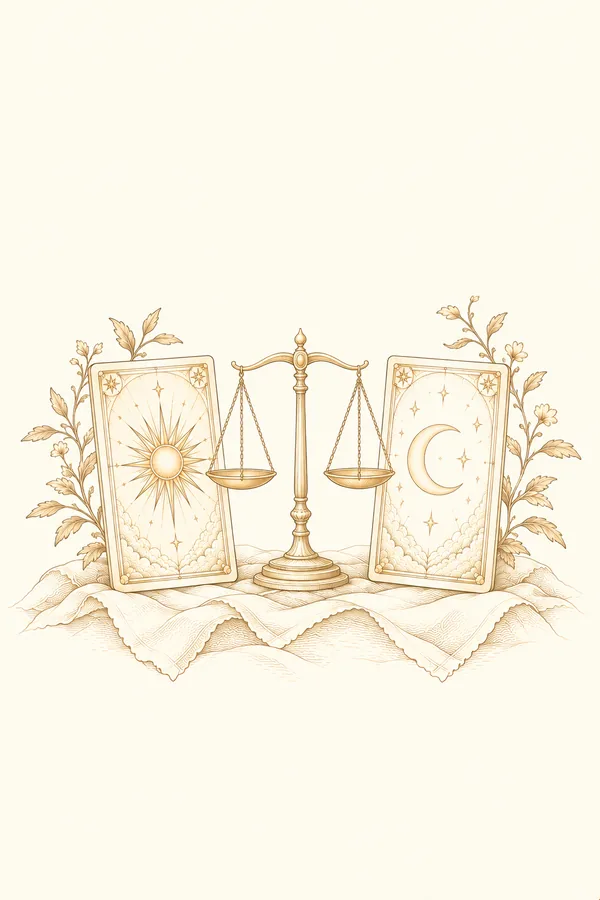
Almost every beginner reading the Celtic Cross hits the same quiet snag: the obstacle card appears near the start, the outcome card sits at the very end, and the mind instinctively connects them as if one were the verdict on the other. If the obstacle looks harsh and the outcome looks bright, we assume the outcome cancels it. If both look grim, we assume the obstacle wins. Either way, we treat the spread as a single sentence with a subject and a conclusion, and the reading flattens.
The obstacle and the outcome are not opponents in a contest. Card 2 answers a different question than Card 10. The obstacle describes what is blocking the querent now — the active friction in the present situation. The outcome describes where the trajectory lands if nothing changes, the natural destination of the current course. They speak in different tenses about different things, and the real reading happens in the conversation between them.
This article offers a practical method for reading those two positions as a dialogue rather than a verdict. We will look at how the obstacle conditions the path, how the outcome responds to that conditioning, and how to tell a genuine resolution from a warning. The Rider-Waite-Smith layout helps ground this: picture Card 2 lying horizontally across Card 1, the crossing card literally barring the way. That image is the key — the obstacle is not a prediction, and the outcome is not a sentence.
What the Obstacle Card Actually Answers
In the Celtic Cross, Card 2 is where readings most often go wrong. It is not the enemy card, and it does not forecast failure. It names the immediate friction—the energy lying across the situation that must be acknowledged before anything moves. This is why the traditional phrasing matters: say “what crosses you,” never “what defeats you.” The first invites examination; the second invites resignation.
Naming the Friction
Ask whether the obstacle is internal or external. Internal: a reversed Four of Cups, where apathy or boredom with what’s offered is the real blockage—nothing outside is stopping the querent. External: a Knight of Swords, where someone else’s haste or aggression is rushing the situation. The guidance differs sharply: the first calls for self-honesty, the second for boundaries.
The Price, Not the Denial
Remember that the obstacle is frequently the price of the goal rather than its refusal. The Two of Swords as crossing card is a useful Rider-Waite example: the obstacle is avoidance of a decision—the blindfold and crossed blades of refusal—not fate conspiring against the querent. The outcome card shows where things land; the obstacle card shows what must be named first so movement becomes possible.
What the Outcome Card Actually Answers
In the Celtic Cross, the obstacle (Card 2) and the outcome (Card 10) are often read as opposites—one problem, one verdict. That framing misses what Card 10 actually does. The outcome card is a trajectory, not a sentence: it shows where the current pattern leads if the querent keeps acting as they are. It answers “where does this go from here?”—not “what will happen to you?”
How the Outcome Responds to the Whole Spread
Read Card 10 last, and read it as a consequence. It responds to the entire spread, especially the present (Card 1), the obstacle (Card 2), and the recent past or departing influence (Card 6). An outcome that seems to contradict the obstacle usually means the obstacle is being worked with, not ignored. When writers present an outcome, they should trace that line back: which earlier card does this card grow out of?
Negative Outcomes Are Directions, Not Prophecies
The Ten of Swords or Five of Pentacles in the outcome position signals a direction to redirect, not a fate sealed. It says: continue this way and here is the shape of the landing. That is actionable information, which is the point.
Major Versus Minor Outcomes
A Major Arcana outcome points to a life lesson unfolding—a theme the querent must integrate. A Minor Arcana outcome describes a passing circumstance, real but temporary. The practical rule holds either way: read the outcome last, and read it as a consequence of the pattern the spread reveals.
The Gap Between Them: Reading Obstacle Against Outcome
Card 2 (the obstacle) and Card 10 (the outcome) are the two ends of the Celtic Cross’s narrative arc, and reading them against each other is where the spread does its most precise work. Lay them side by side and ask one question: is the obstacle resolved, repeated, or transformed on the way to the outcome?
The pairing itself tells you. The Eight of Cups crossing a Six of Cups outcome shows that leaving — the obstacle’s harsh demand — is precisely the path to the sweetness the outcome promises. The Devil crossing a Two of Cups outcome suggests attachment patterns shape the relationship result; the obstacle isn’t removed, it’s metabolized into the bond’s terms.
Reading Suits and Elements
Identify the suit and element of both cards. A Swords obstacle easing into a Cups outcome narrates mental conflict softening into feeling; a Cups obstacle meeting a Pentacles outcome shows emotion settling into something practical. Elemental shifts reveal the nature of the transformation.
Three Questions to Ask Any Pairing
- Does Card 10 contain or answer the tension in Card 2 — or repeat it?
- What element changes between them, and what does that shift describe?
- What must be transformed for the obstacle not to reappear in the outcome?
When the Obstacle Outweighs the Outcome
A heavy crossing card beside a modest outcome card unsettles readers: does the obstacle override the result? No. Weigh both positions by the same measures before drawing conclusions.
Weighing the Two Positions
- Major vs. Minor: A Major obstacle describes a large, structural challenge; a Minor outcome describes a quiet, workable result. The goal is simply smaller than the fight.
- Reversals: A reversed obstacle softens or internalizes the block; a reversed outcome delays resolution rather than denying it.
- Court cards: An obstacle court card may be a person or a role you must manage; an outcome court card points to a capacity you’ll grow into. Neither outweighs the other by rank alone.
The Tower and the Four of Wands
The Tower as obstacle beside a calm Four of Wands outcome is not doom. The collapse clears ground for stability: something false must fall before the canopy goes up. Read it as demolition before the celebration, not destruction instead of it.
Reframing Language for a Live Reading
Resist fortune-telling fatalism. Try: “Your obstacle is bigger than your goal — that’s a scale mismatch, not a verdict.” Or: “This is a steep climb to a modest summit, so pace yourself.” Or: “The fight is real; the win is just quieter than you expected.”
When the Outcome Softens the Obstacle
A gentle Outcome card—the Star, the Sun, the Six of Cups—can tempt a querent to relax before the work begins. In a Celtic Cross, the obstacle versus outcome pairing does not work that way. The Outcome shows the reward for addressing the obstacle, not a reprieve from it. When these two cards sit in tension, the obstacle is the doorway to the outcome, not a wall beside it.
The Obstacle as Doorway
Picture the Hermit crossing the Star. The Hermit speaks to solitude, withdrawal, or a season of searching, and it is easy to read that as the problem to be solved. But with the Star as Outcome, the reading flips: quiet withdrawal is precisely what replenishes the querent. The obstacle is not blocking the renewal—it is the path to it. Read together, these cards say the solitude must be honored, not rushed past.
The Beginner’s Trap
The most common mistake is jumping straight to Card 10, pinning hope on the bright Outcome while ignoring Card 2. But an obstacle that is never named does not dissolve; it quietly withholds the promise. A soft Outcome is a reason to engage the obstacle, not to skip it.
How Card 9 Distorts the Pairing
Card 9, Hopes and Fears, colors how the querent sees both cards—hoping the outcome arrives for free, or fearing the obstacle is insurmountable. Show both distortions. Naming them lets the reading stay honest.
Practice Spread: The Obstacle-Outcome Pair
The two most load-bearing positions in the Celtic Cross are the obstacle (the card that crosses you) and the outcome (where the matter is heading). You can work with just this pair—no ten-card commitment required.
The Exercise
Shuffle while holding one clear question in mind. Pull two cards: the first answers “What crosses me?”, the second “Where does this lead?” Lay them side by side and read only their relationship. Does the obstacle explain the outcome, complicate it, or point toward a way through it? A harsh obstacle with a gentle outcome reads very differently from a mild obstacle with a warning at the end.
Journaling Prompt
My obstacle is showing up as this behavior: ______. The outcome points in this direction: ______. What one action closes the gap between them?
Naming the obstacle as a behavior (not a fate) and the outcome as a direction (not a verdict) keeps the pair actionable.
Weekly Practice
Ask the same question each week and log the pair in your journal. Over a month, you’ll see whether the obstacle is softening and the outcome clarifying—a living diagnostic rather than a snapshot.
This pair also works inside a full Celtic Cross when time is short: read the crossing card against the outcome card first, and consult the rest only if needed.
Common Misreadings to Avoid
Beginners often stumble on the obstacle/outcome axis of the Celtic Cross. Here are the four errors to watch for, each with a quick fix.
Mistake 1: Treating Card 2 as a villain
The obstacle (Card 2) is information, not an enemy. Correction: read it as a condition to work with, not a curse. Rider-Waite image: the Hermit—the obstacle is often a call to pause and look inward, not a monster blocking the road.
Mistake 2: Treating Card 10 as fixed fate
Outcome (Card 10) shows the trajectory if nothing changes, not a sealed verdict. Correction: frame it as “where this leads,” then ask what choice shifts it. Rider-Waite image: the Wheel of Fortune—outcomes turn; you are not pinned beneath the wheel.
Mistake 3: Reading the obstacle in isolation from Card 1
Card 2 only makes sense against the present situation (Card 1). Correction: read them as a pair—what is, and what complicates it. Rider-Waite image: the Two of Wands—the figure holds one wand and eyes another; context defines the choice.
Mistake 4: Letting a scary outcome hijack the reading
One frightening Card 10 does not erase the rest of the spread. Correction: return to the whole cross before concluding. Rider-Waite image: Death—as an obstacle, it signals transformation demanded, not doom.
Firm rule, gentle reminder: read cards as guidance, never as sentence.
Questions Readers Ask About Obstacle and Outcome
Even after learning to read Card 2 (the obstacle) and Card 10 (the outcome) as a pair, readers often arrive with the same follow-up questions. These short answers build directly on the pairing method covered earlier.
Does the obstacle card mean I should give up?
No. Card 2 identifies the friction sitting between you and the outcome, not a verdict on whether to continue. Read it as information about what must be named or addressed, then revisit how it pairs with Card 10.
Can the outcome change after the reading?
Yes. Card 10 shows the trajectory the current energies are tracing, and shifts in the obstacle or your choices redirect that line. Treat the outcome as a forecast, not a fixed sentence.
What if Card 2 and Card 10 are the same card?
This is a strong signal that the obstacle and the goal are entangled—often the very thing blocking you is the thing you most want. Apply the pairing method from earlier: ask what it would mean to work with that energy rather than against it.
What if both are reversed?
Two reversed cards keep the same relationship but turn it inward—the obstacle is likely internal (a belief or habit), and the outcome is still forming or partly hidden. Read the reversal as a shift in emphasis, not a change of subject.
How does the near-future card (Card 6) sit between them?
Card 6 shows the hinge moment that moves the reading from the obstacle toward the outcome, making the pair a timeline rather than a static comparison. Return to the pairing method to see how Card 6 bridges the two.
Conclusion
The obstacle is not a verdict against you — it is the question the outcome answers. In the Celtic Cross, the obstacle card (position 2) and the outcome card (position 10) are not opponents in a courtroom; they are two halves of a conversation. The obstacle names what must be met, and the outcome shows what becomes possible when it is. Read together, they turn a spread that once felt like judgment into a dialogue you can actually work with.
Try the practice pair
Before your next full Celtic Cross, draw just two cards: one for the obstacle, one for the outcome. Sit with them as question and answer rather than problem and sentence. Then journal that dialogue over time — revisit what you wrote weeks later and notice how the conversation shifted as you did. The obstacle-outcome pairing rewards patience far more than a single reading ever can.
The cards show the road; the querent steers.
Recommended tool
The 10-Card Celtic Cross
Lay the full spread and read all ten positions of your question.
Keep reading
More on Celtic Cross
October 25, 2026
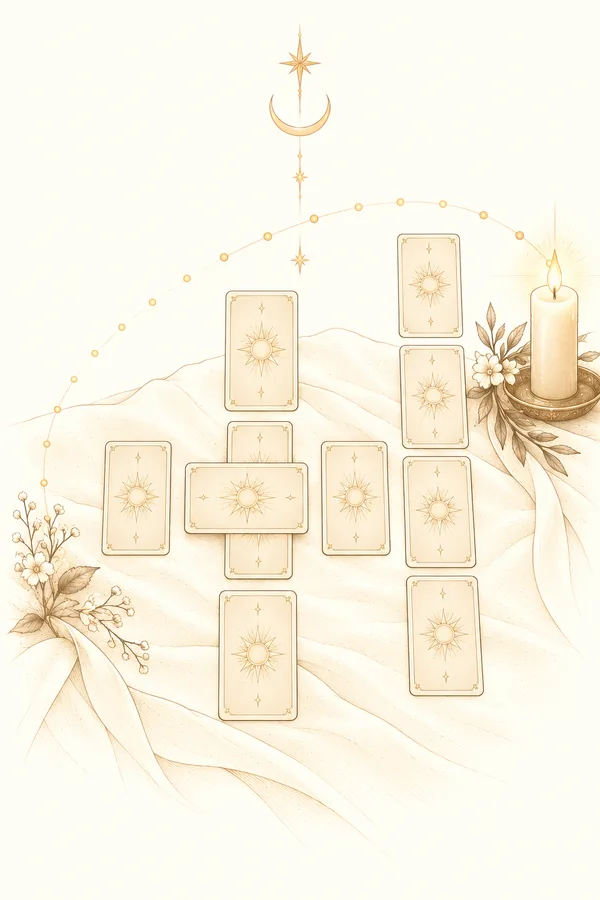
Celtic Cross Card Placement: Which Positions Matter Most
A position-by-position guide to Celtic Cross card placement: what each of the ten slots means, the disputed ones, and the patterns that matter most.
Read the article
October 31, 2026
Celtic Cross Position 9: Hopes and Fears
Celtic Cross position 9: the card that holds hope and fear at once. How to tell which is speaking, and the question that separates them.
Read the article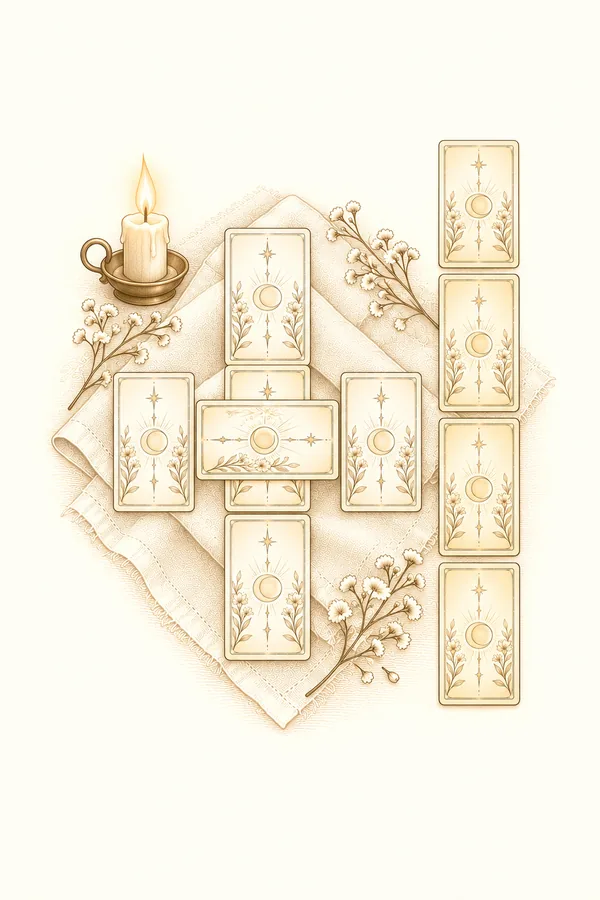
October 31, 2026
Celtic Cross Position 1: The Present Card
Celtic Cross position 1: the heart of the matter, the significator debate, and how card 2 rewrites what you read here. With Rider-Waite examples.
Read the article