September 29, 2026
Scary Tarot Cards Explained: The Truth About The Tower, Death, and The Devil
The Tower, Death, and The Devil scare every beginner. Learn what these intense cards actually mean - and why they rarely mean disaster.
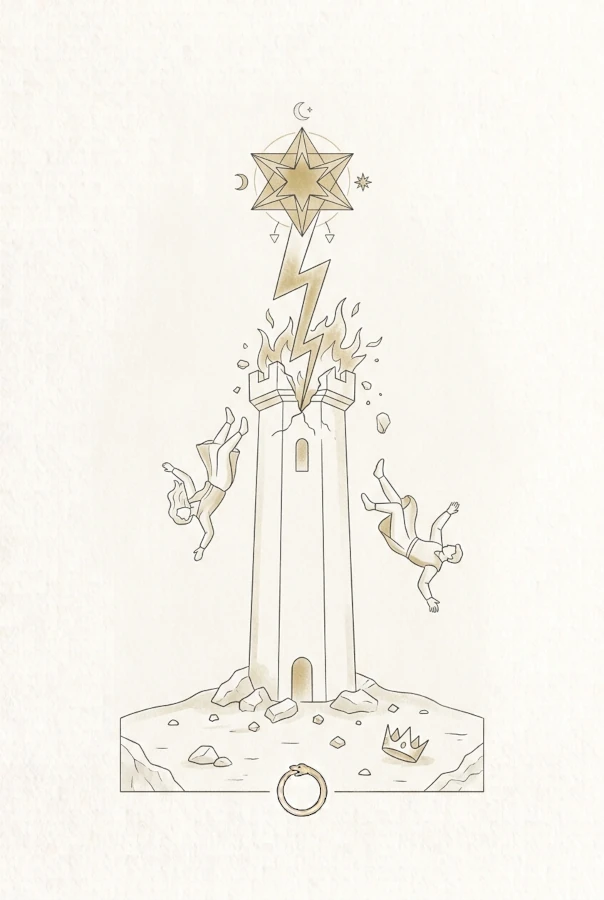
The Tower. Death. The Devil. If your stomach drops when one of these lands on the table, you are not alone. Nearly every tarot reader remembers their first encounter with a so-called “scary tarot card” — and the quiet panic that followed. That dread is normal, and it says far more about the imagery and names on the cards than about your future.
Here is the reassuring truth: in tarot, scary cards are rarely about literal doom. Death almost never means an actual death. The Devil is not a literal demon, and The Tower is not a prophecy of disaster. These cards are catalysts, mirrors, and turning points. They appear when something needs to end, when a pattern has become a cage, or when a sudden shake-up clears ground for real growth. Their bark is loud; their bite is usually a lesson.
This article walks you through the cards most often labeled frightening — The Tower, Death, The Devil, the Ten of Swords, the Three of Swords, and a few more — and explains why they look so alarming in the first place. You will learn what each card actually means upright and reversed, and, most importantly, how to read them without panic. By the end, you will not just tolerate these cards. You may come to welcome them.
Why Some Tarot Cards Look Scarier Than They Are
Skeletons, lightning, chains, and horns. Before you interpret a single symbol, your nervous system has already reacted. That flash of unease is real—and it’s not a sign that the cards are evil. It’s your brain doing its job.
Instinct Before Interpretation
Human beings are wired to notice threat imagery fast. Death, the Devil, and the Tower in the Rider-Waite-Smith deck jump out precisely because Pamela Colman Smith chose bold, confronting pictures. But her choices were symbolic, not literal. The Devil’s inverted pentagram points downward as a sign of matter over spirit, not a satanic endorsement. Death carries a white rose banner, a classic emblem of renewal and purity. The Tower’s falling crown signals the collapse of ego and false structures—not your actual doom.
Hollywood Didn’t Help
Decades of horror films and TV have borrowed tarot imagery, teaching us to read it as menace. Most tarot traditions, by contrast, read these cards as neutral to positive once context is applied. Death often means transformation. The Devil can point to freeing yourself from a bad habit or a suffocating attachment. The Tower clears ground for something honest to be built.
So if a card makes you flinch, notice the flinch—then look again. The picture is doing its job: getting your attention so the reading can begin.
Death (Card 13): The Scariest Card That Rarely Means Dying
Few cards alarm a querent like Death. Yet in standard readings, it almost never predicts physical death. This is the ultimate “scary tarot card” that actually speaks of endings, transitions, and necessary closure — the door closing so another can open.
What the Rider-Waite Image Really Shows
The white horse carries no menace; white signals purity and forward motion. The black armor is not evil but neutrality — Death plays no favorites. Between two towers, the sun rises: illumination after loss. A king has fallen, yet the child and maiden remain standing, showing renewal across every level of society, from ruler to innocent.
Upright and Reversed
Upright, Death marks the end of a chapter: a breakup, a job change, grief work completed, a habit outgrown. Reversed, it warns of resisting change, stagnation, or dragging out an ending long past its time.
A useful prompt: “What needs to end for me to grow?” Treat Death as a liberator, not a executioner.
The Tower (Card 16): Sudden Upheaval, Not Punishment
The Tower is the card most likely to make a querent flinch—and that reaction is exactly why it belongs at the top of any list of scary tarot cards. Look closer, though, and you’ll see The Tower isn’t a punishment. It’s a liberation.
The imagery tells the story. Lightning strikes the tower’s crown—the false beliefs, the shaky foundations, the ambitions propped up by ego—and blows it clean off. The figures fall, but they fall away from the structure that was already cracked. Flames rage, yet above the chaos the sky stays serene. Clarity follows collapse. What the lightning destroys was never solid to begin with; it was only pretending to be.
Grounded Interpretations
- Sudden realization: a truth you can no longer unsee, arriving all at once.
- Job loss: a forced pivot that redirects a stagnant career.
- Relationship truth: a long-avoided fact surfacing, painful but clarifying.
- Reversed: fear of inevitable change—or a crisis narrowly avoided.
Tarot doesn’t deal in cruelty; it deals in honesty. When The Tower appears, ask not “What am I losing?” but “What was already gone?” The upheaval isn’t the point. The clearing is.
The Devil (Card 15): Bondage, Addiction, and the Chains You Can Remove
The Devil is the card that makes people flinch — and that reaction is exactly why it earns its place among the scary tarot cards. But look closely at the Rider-Waite imagery: two figures stand chained to a pedestal, yet the chains around their necks are deliberately loose. Nothing binds them. If they wanted to, they could simply walk away. That single detail is the whole message: The Devil is not a demonic entity reaching for you. It is attachment, temptation, and self-imposed limitation — the cage you keep choosing.
Upright meaning
In a reading, The Devil highlights unhealthy patterns, toxic power dynamics, materialism, and obsessive relationships. It names the bargain you keep making: staying small because freedom feels riskier than familiar pain. The card doesn’t judge; it points.
Reversed meaning
Reversed, The Devil signals breaking free, reclaiming power, and recognizing manipulation — the moment you notice the collar was never locked.
A journal prompt
What keeps me bound, and what would it cost me to remove the chain I already hold in my hands?
The Devil isn’t here to scare you. It’s here to remind you that awareness is the key to every lock.
Ten of Swords: The Drama Card With a Hidden Sunrise
Few cards in the deck alarm querents like the Ten of Swords. The imagery is deliberately stark: a figure lies face-down, ten blades buried in their back, sky black overhead. It looks like a murder scene, and new readers often gasp when it appears. But this is one of the most misunderstood cards in tarot — scary tarot cards earn their reputation through drama, not doom.
The Detail Everyone Misses
Look past the body and you’ll see it: a golden sunrise breaking on the horizon. The worst has already happened. Ten swords is the maximum the suit can hold — there is no eleventh blade coming. This card marks rock bottom, and rock bottom is, paradoxically, good news. The ending is complete, which means it’s finally over.
Upright Meaning
Betrayal, exhaustion, dramatic endings, and the moment you stop fighting a losing battle. The Ten of Swords often appears when you’ve been blindsided — or when you’ve stayed too long in something that was already finished.
Reversed Meaning
Recovery, survival, and refusing to play the victim. Reversed, the swords fall away from the figure; the pain is releasing, and you’re choosing to rise.
Pairing It With Hope
Set beside The Star, the Ten of Swords transforms: the sunrise in the card becomes the healing waters of the Star. Rock bottom was not the end of your story — it was the turning point.
Three of Swords and Nine of Swords: Heartbreak and 3 A.M. Anxiety
These two cards top almost every list of scary tarot cards, but they are not the same kind of frightening. The Three of Swords is grief with a cause: a red heart pierced by three blades, rain falling, sky gray. It marks a real wound — betrayal, breakup, a truth that cuts. Upright, it means heartbreak, painful honesty, and the words that cannot be unsaid. Reversed, it points to healing begun, or grief held too long; sometimes it warns that you are re-opening a healed wound by replaying it. The Three asks for acceptance, not comfort.
Nine of Swords: The 3 A.M. Card
The Nine of Swords shows someone sitting up in bed, face in hands, nine blades hanging on the dark wall. This is mental torment — insomnia, guilt, catastrophizing — and it is often worse than the reality it reflects. Upright: anxiety spirals, nightmares, the mind at 3 a.m. Reversed: the worst has passed, dawn arriving, or shame finally spoken aloud.
Gentle Reading Approaches
With the Nine, ask: “What is the story my fear is telling me — and is it true?” With the Three, ask: “What truth must I accept?” Nervous system first, meaning second. These cards do not predict doom; they describe pain honestly, which is the first step out of it.
Other Cards That Unnerve Beginners (Judgment, Five of Pentacles, The Moon)
Beyond the usual suspects like Death and The Tower, a few cards earn honorary scary status simply because beginners haven’t yet learned their gentler language.
Judgment
Judgment rarely means condemnation. This is the resurrection card: the trumpet sounds, the dead rise, and what was buried comes back into the light. It signals a reckoning, yes, but a merciful one—a final wake-up call, an honest accounting that clears the way forward. It asks, “What are you ready to answer for, and what are you ready to leave behind?”
Five of Pentacles
The Five of Pentacles depicts hardship: two figures trudging through snow, shut out in the cold. It can reflect financial strain, illness, or plain loneliness. But look closely—a lit church window glows beside them. Help is near, even when it doesn’t feel near. The card names the cold; it doesn’t sentence you to it.
The Moon
The Moon unsettles readers with its howling wolf and winding path. It governs illusion, fear, and the unconscious—not madness, despite the pop-culture baggage. When The Moon appears, things are murky: intuition is loud, clarity is low, and not everything is as it seems.
Anxiety-Adjacent Favorites
The Page of Swords (restless thoughts, spiky energy) and the Ten of Wands (overload, carrying too much) round out the list. Remember: your fear of a card usually says more about your situation than about the card itself.
How to Read a Scary Card Without Spiraling
Death. The Tower. Ten of Swords. Every reader eventually draws a card that makes their stomach drop. The skill isn’t avoiding scary tarot cards — it’s learning to read them without letting panic write the interpretation.
A Four-Step Pause
- Pause. Notice your reaction before you interpret anything. A racing heart is information about you, not a verdict from the deck.
- Name the fear. Say it plainly: “I’m afraid this means loss.” Naming it separates the feeling from the card itself.
- Check the position. The Tower in a “what to release” slot reads very differently than in “near future.” Position shapes meaning more than the image does.
- Read the neighbors. Context softens drama. The Ten of Swords beside the Star tells a story of recovery, not ruin.
Reframe the Language
Swap catastrophizing for curiosity. Instead of “You will lose everything,” try “Something is asking to be released.” Instead of “This will destroy you,” try “This is clearing what can’t stay.” Reversals often soften rather than intensify a message — a reversed Death may mean resistance to change, not more of it.
Practical Tools
- Pull a clarifying card and read it as a modifier.
- Place the same card in a past/present/future spread to see it as movement, not fate.
- Journal your first instinctive reaction before opening a guidebook — then compare. Your gut often holds the truer reading.
Scary tarot cards aren’t warnings from the universe. They’re invitations to look closer.
Spreads for Facing Fearful Cards Head-On
Scary tarot cards lose their power when you give them a structured conversation instead of a panicked glance.
Three-Card Spread for Death and The Tower
What is ending / What is being revealed / What is being born. Death clears space; The Tower demolishes what cannot stand. This spread reframes both as processes rather than punishments, showing you what the upheaval is actually making room for.
Five-Card “Chain-Breaker” Spread for The Devil
Lay out: the attachment, its payoff, its cost, the loose chain, the first step. The Devil rarely means literal bondage — it points to a habit, dynamic, or belief you keep choosing. Naming the payoff without shame is what makes the loose chain visible.
Two-Card “Nightmare and Sunrise” for Nine of Swords
Pair the Nine of Swords with one hope card. The first card honors the 3 a.m. spiral; the second asks, gently, what is also true. Together they hold anxiety and possibility in the same reading.
Monthly Shadow Card Practice
Once a month, deliberately draw one intimidating card and sit with it for ten minutes — journal, breathe, ask what it wants you to know. Familiarity, not avoidance, dissolves fear. After a year, the cards that once frightened you become colleagues.
Conclusion: Befriending the Cards That Scare You
Scary tarot cards are not the deck’s villains — they are its most honest teachers. Death, The Tower, and The Devil rarely signal literal doom; far more often, they mark a growth edge, a place where something is ready to shift. These are the cards people remember years later, the ones that quietly accompanied the periods they now describe as their turning points.
Every reader meets them. The Tower falls in beginner readings and professional ones alike. The Devil appears for the most grounded people you know. Death shows up in decks that have barely been shuffled. That universality is the point: if these cards spelled disaster, none of us would still be reading tarot.
So here is a small, brave invitation. This week, draw one card you usually dread — or deliberately choose Death, The Tower, or The Devil — and sit with it for ten quiet minutes. Ask what it wants you to see, not what it wants to take from you. Notice how quickly fear turns into clarity.
And if you are a beginner, hold this close: the cards have no power to harm you. They only have the power to show you.