September 28, 2026
Top 10 Love Cards
Which cards matter most in love readings? From The Lovers to the Two of Cups: key cards, simple spreads, and real questions.
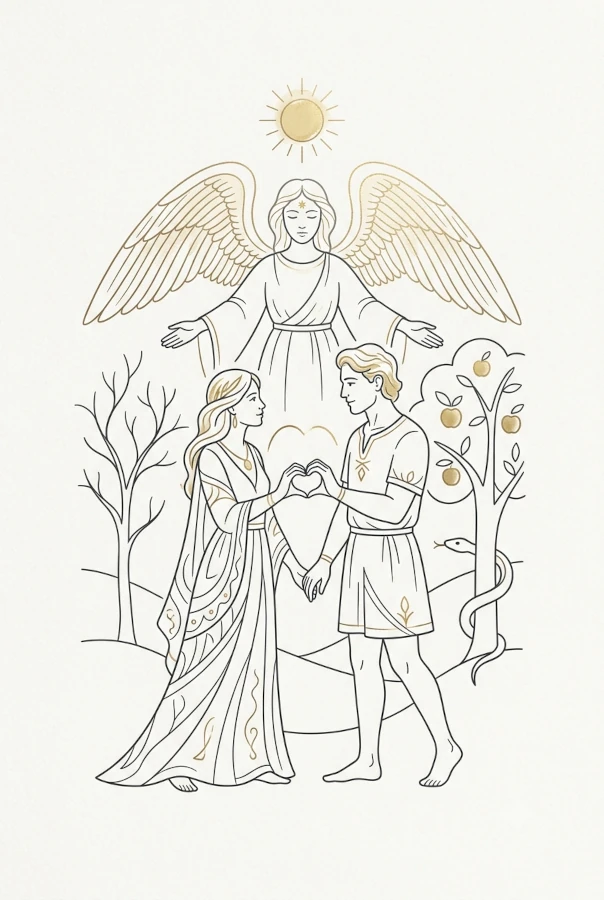
Love tarot cards are less about predicting a soulmate and more about understanding the heart you already have. Used well, a tarot deck becomes a mirror for romance, relationships, and the quieter work of self-knowledge. The cards do not decide who you will marry or when a text will arrive. They help you notice what you feel, what you avoid, and what you keep repeating in the name of love.
One of the most freeing truths for beginners is this: any card can speak to love. A card’s meaning shifts with its context—the question you asked, its position in a spread, and the cards around it. The Three of Swords can describe heartbreak, but it can also mark the honest pain that clears space for something real. The Emperor may point to a steady partner, or to your own need for firmer boundaries.
Most readers start with the Rider-Waite-Smith deck, the familiar standard whose clear imagery makes learning intuitive. From there, this guide covers the essentials: single-card draws, the four suits, simple love spreads, and the real questions readers bring to the cards. Whether you are new to tarot or deepening a longtime practice, treat these cards as a practical, compassionate tool for insight—not a verdict.
The Major Arcana in Love Readings
When love tarot cards turn up Major Arcana, the reading shifts from casual dating to soul-level territory. These 22 cards speak to major life lessons, karmic bonds, and the kind of love that reshapes you. Still, context matters: a Major card in a “will they text back?” spread isn’t automatically destiny.
The Lovers
Upright: A choice of the heart, deep alignment, or a significant union. Reversed: Misalignment, temptation, or avoiding a commitment decision. Symbolism: the angel above two figures echoes both blessing and the need to choose.
The Empress
Upright: Nurturing, sensual abundance, fertile love. Reversed: Smothering, creative or emotional neglect, insecurity. Symbolism: her wheat field and Venus shield signal growth and pleasure.
The Emperor
Upright: Stability, protection, committed structure. Reversed: Control, rigidity, or an emotionally distant partner. Symbolism: his throne and ram heads point to authority and boundaries.
The Hierophant
Upright: Traditional commitment, marriage, shared values. Reversed: Nonconformity, breaking relationship rules, or mismatched beliefs. Symbolism: keys and triple cross suggest sanctioned bonds.
The Devil
Upright: Intense attraction, attachment, or codependency. Reversed: Breaking free from toxic patterns. Symbolism: chains are loose, reminding you the trap is chosen.
The Tower
Upright: Sudden revelation that restructures the relationship. Reversed: Avoiding necessary upheaval. Symbolism: lightning-struck crown equals false foundations falling.
The Star
Upright: Healing, hope, authentic connection after hardship. Reversed: Doubt or disconnection from desire. Symbolism: one foot in water, one on land, balancing emotion and reality.
The Moon
Upright: Illusion, intuition, hidden feelings. Reversed: Confusion clearing or secrets surfacing. Symbolism: the dog and wolf represent instinct versus fear.
Don’t read every Major pull as fate. Check its position, the surrounding minors, and the actual question before declaring soulmates.
The Minor Arcana Suits and Their Romantic Language
When love tarot cards appear in a reading, the four Minor Arcana suits each speak a distinct romantic dialect. Cups express emotion—the Ace of Cups overflows with new feeling, while the Two of Cups shows the mutual exchange pictured in Rider-Waite: two figures trading cups beneath a caduceus, a symbol of balanced partnership. The Ten of Cups, with its rainbow arching over a family, captures enduring emotional fulfillment.
Wands channel passion and drive. The Knight of Wands rides in fast and fiery, representing chemistry, pursuit, and impulsive desire.
Swords govern communication and conflict. The Queen of Swords, holding her blade upright, embodies honesty and clear boundaries—necessary for healthy love, even when truths sting.
Pentacles ground love in stability and commitment. The Ten of Pentacles depicts generations and legacy, the long-term security of shared roots.
Court cards add nuance: they may represent the querent, a partner, or the relationship’s prevailing energy. A Page of Cups could be a sweet admirer or a call to open your heart; a King of Pentacles might be a steady provider or your own need for reliability. Read together, the suits reveal whether love is felt, pursued, spoken, or built.
Upright vs Reversed Love Card Meanings
In love tarot cards, reversals don’t simply flip a reading from positive to negative. They shift the energy: a card may be blocked, excessive, internalized, or still in process. The Lovers upright speaks of alignment and conscious choice; reversed, it often points to misalignment or a choice avoided—two people wanting different things, or one person unwilling to commit. The Three of Swords upright signals heartbreak; reversed, it usually means healing after heartbreak, grief loosening its grip, or pain turned inward rather than expressed.
How to Read a Reversed Love Card
Rather than assuming the worst, ask: Is this energy blocked, overdone, or directed inward? A reversed Empress, for example, can mean self-love neglected—not a doomed relationship.
Practical tips: First, check whether the card is literally upside down or merely in a challenging spread position (such as the obstacle card). Second, look at neighboring cards—a reversal clarified by the Star reads very differently than one beside the Ten of Wands. Third, avoid fear-based readings; a reversal is information, not a verdict.
Finally, trust the overall spread story. One reversed love card doesn’t override a spread of supportive cards. Let the whole reading—not a single flipped image—guide your interpretation.
Essential Love Tarot Spreads for Beginners
Love tarot cards work best when your spreads are simple and your questions are open-ended. Start with these four beginner-friendly layouts.
One-Card Message for My Love Life Today
Draw a single card as a daily check-in. Ask: “What do I need to know about my love life today?” or “What energy should I bring to my relationships right now?”
Three-Card Past/Present/Future
Position 1: past influences on the relationship. Position 2: the present dynamic. Position 3: the likely direction. Ask: “What is shaping this connection, and where is it heading?”
Two-Card “You and Them” Compatibility Pull
Place one card for you, one for them, then read them together. Ask: “What do I bring to this connection, and what do they bring?”
Five-Card “Where Is This Going?”
- You now. 2. Them now. 3. The connection’s strength. 4. The challenge. 5. The likely outcome. Ask: “What do I need to know about this connection?”
For deeper insight, the Celtic Cross is an advanced option once you’re comfortable with these basics. Always write open-ended questions focused on growth, not yes/no outcomes—love tarot cards reveal perspective, not guarantees.
Real Love Questions and What to Ask the Cards
Most people come to love tarot cards with urgent, pointed questions: Does he love me? Will my ex come back? Is this relationship worth staying in? When will I meet someone? These are honest, human questions — and every one of them can be reframed into a reading that serves you better.
Reframing the Question
- “Does he love me?” → What can I understand about the true nature of this connection?
- “Will my ex come back?” → What patterns brought this relationship to its end, and what do I need to heal?
- “Should I stay or go?” → What does my heart already know about what I need?
- “When will I meet someone?” → What is blocking me from the love I want right now?
The Eight of Cups answers the stay-or-go question beautifully. A figure walks away from eight neatly stacked cups, leaving behind what looks full but no longer fulfills. When this card appears, the question isn’t whether your partner is good enough — it’s whether you are honoring what your spirit actually needs. The card doesn’t command you to leave; it asks you to be honest about what you’re holding onto.
Ethical Boundaries
Reading about a third party without their consent — a partner, an ex, a crush — is where love tarot cards get misused. You can always read yourself in relation to them: your feelings, your choices, your patterns. You cannot ethically read their private inner world.
Tarot is a mirror for self-reflection, not a surveillance tool. Every card holds agency, not prophecy. The most powerful love reading ends not with an answer about someone else, but with a clearer sense of what you will do next.
Combining Cards: Reading Love Spreads as a Story
Individual love tarot cards only reveal their full meaning in context. A love spread is a sentence, not a word list — so synthesize before you interpret.
A Working Example
Suppose a three-card spread shows the Two of Cups, the Tower, and the Star. Read alone, each card is a cliché. Read together, they form a narrative: connection (Two of Cups) is disrupted by sudden upheaval (Tower), which space for healing and renewed hope (the Star). The story is rupture and renewal, not doom.
Elemental and Numeric Threads
Multiple Cups signal emotional focus; repeated Wands point to passion or friction. Watch numbers too — several fives (Five of Cups, Five of Pentacles) tilt the spread toward conflict and change. Here, the Two and the Star’s associated number suggest partnership rebuilding after crisis.
Court Cards and Majors
Court cards personify — a Queen of Cups may be your partner or your own emotional stance. Majors signal a life lesson rather than a passing mood. A spread heavy with Majors, as above, means this love matter carries karmic weight: it is a chapter, not an episode.
Quick Checklist
- Note repeated numbers or symbols.
- Identify the dominant suit — it shows where energy lives.
- Notice missing suits — absent Cups may mean feelings go unspoken.
- Read the final card as the outcome’s tone.
Weave the cards into one continuous story, and your love readings become far more accurate and human.
Common Mistakes and Quick Answers for New Love Readers
Mistakes to Avoid
New readers often panic at cards like Death, the Ten of Swords, or the Tower in a love tarot cards spread. These rarely mean literal endings or betrayal; they signal transformation, release, and necessary change. Another common error is ignoring reversals—reversed cards aren’t “bad,” they show blocked or internalised energy. Over-asking the same question (“Will they come back?”) within days muddies your reading. Finally, projecting wishful thinking onto every positive card can blind you to nuance.
Quick Answers to Common FAQs
Can tarot predict a specific person? No. Love tarot cards reveal energies, patterns, and likely dynamics—not a guaranteed name or outcome.
How often should I read on the same relationship? Wait at least two weeks or until something meaningful changes. Daily repeats create anxiety, not clarity.
What if a reading feels confusing? Pause. Write the cards down, step away, and revisit in a day. Confusion often means you’re forcing a preferred answer.
Build Intuition Fast
Keep a tarot journal—one card daily, noting feelings and later events. A daily one-card love practice (e.g., “What energy should I bring to love today?”) builds trust in your instincts faster than any guidebook.
The Real-World Bridge
Tarot offers insight, but honest conversation and real-world action seal the deal. Use the cards to open dialogue, not replace it.