November 4, 2026
How to Read the Celtic Cross Without a Guidebook
Read the Celtic Cross without a guidebook: the three questions that replace memorised positions, and how to build the story card by card.
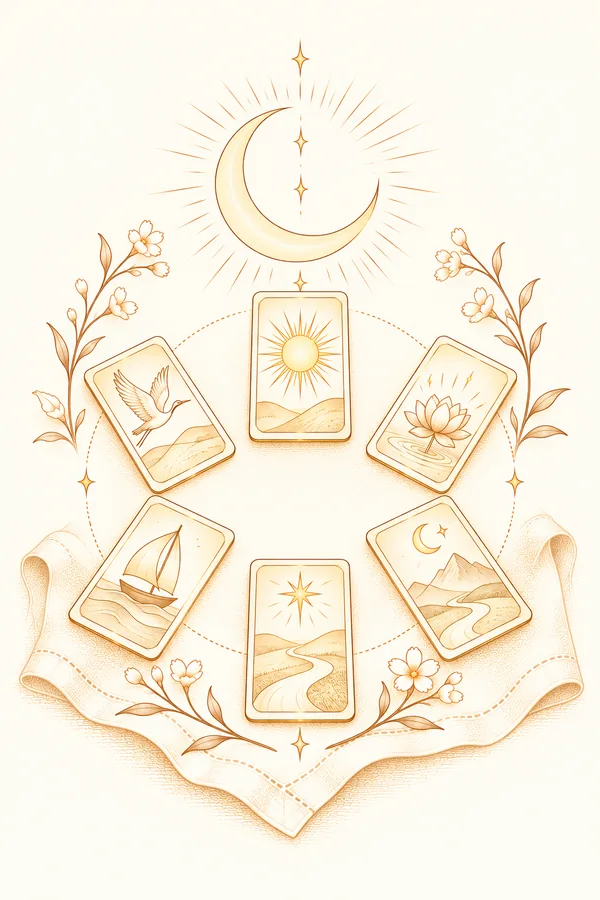
You do not need a guidebook to read the Celtic Cross. What you need is a clear grasp of what each of the ten positions asks, and the willingness to let the cards in those positions speak through their imagery. That combination—fixed positional meaning plus intuitive card reading—is what turns a spread from a memorization exercise into an actual reading.
Set your expectations before you begin. The Celtic Cross has ten positions arranged in two structures: the cross (positions one through six), which centers on the matter at hand and its unfolding, and the staff (positions seven through ten), which widens the lens to your inner stance, your environment, and where things are heading. Ten positions, two structures, one story. Everything you read should serve that single narrative.
If you work with Rider-Waite-Smith or a close variant, the imagery alone gives you enough visual cues to interpret every slot. Figures, gestures, weather, and direction of movement all carry meaning you can read directly. A card in the “hopes and fears” position does not require a lookup—it requires you to look at what the figure is doing and ask what that suggests about wanting and dreading at once.
What follows is a repeatable method you can use on your first try: read the position, describe the card, then connect the two in one sentence.
Know the Skeleton Before You Read a Single Card
Before you interpret a single card, memorize the Celtic Cross’s architecture. The layout traces to Arthur Edward Waite’s 1910 The Pictorial Key to the Tarot, and its positions—not its cards—carry the reading’s logic.
From memory, build the cross: a significator or present situation at center, crossed by the challenge; the foundation beneath, the recent past to one side, the crown or goal above, and the near future ahead. Then the staff of four: self, environment, hopes and fears, and outcome.
Draw It Until It’s Automatic
Sketch the shape and label each position on paper—repeatedly, until you can place all ten without thinking. This is your guidebook replacement: a fixed map you carry internally.
Positions Are Fixed; Cards Flex
The critical insight: position meanings stay constant while card meanings adapt. A tense card in the “hopes and fears” slot is read as a hope or fear, not a prediction; the same card in “outcome” speaks differently. Master the skeleton, and any deck becomes readable—no reference book required.
Position One and Two: The Heart of the Matter and What Crosses It
The first two cards of the Celtic Cross carry the most weight in the spread, and you can read them confidently without memorizing a single guidebook definition. Card one names the querent’s core situation — the heart of the matter as it stands right now. Card two is the obstacle: not necessarily a villain, but the force crossing, complicating, or testing that central situation.
Read the Cross Before the Meaning
Give yourself one concrete instruction: read card two as a force acting on card one, then ask how the two images interact visually. Look at what each figure faces, where lines of sight point, and whether the images push against or soften each other.
Take the Eight of Swords crossed by the Star. On its own, the Eight of Swords suggests restriction and blind anxiety. The Star crossing it doesn’t cancel that — it shows tension and relief coexisting. The bindings remain, but hope and healing press into the situation. That visual contrast is your reading.
What to Avoid
Put this rule at the center of how to read the Celtic Cross without a guidebook: never treat the challenge card as a prediction of doom. The Star crossing the Eight of Swords isn’t a threat — it’s a countervailing force. Describe what crosses, not what condemns.
The Vertical Axis: Foundation, Recent Past, Goal, and Near Future
Cards three through six form the timeline spine of the Celtic Cross—the vertical axis that runs beneath, behind, above, and ahead of the central situation. Reading them without a guidebook means trusting their positional logic rather than memorized keyword lists.
Root and Release
Card three (below) is the subconscious foundation: the known-but-unspoken cause beneath the reading. Ask what the querent hasn’t said aloud. Card four (behind) is what is genuinely passing out of relevance—not every past event, only what no longer shapes the present. Resist the urge to re-litigate it.
Aspiration and Arrival
Card five (above) is conscious aspiration—what the querent wants or believes they’re working toward. It is a stated goal, not a guaranteed outcome. Card six (ahead) is the next concrete event or mood approaching, often within weeks.
The Mirror Check
Compare cards three and five. Do they share a suit or number? A shared suit shows the same energy running beneath and above—desire and cause aligned. Different suits—or a number appearing in both—often reveals inner conflict versus outer goal: the root pulls one way, the stated aim another. That friction is the reading’s real message, legible without any book.
The Staff: Self, Environment, Hopes and Fears, Outcome
The final four cards of the Celtic Cross—positions seven through ten—form the staff, and they tell the external story of the reading. Without a guidebook, treat them as the querent’s visible world rather than their inner process.
Cards Seven and Eight
Card seven is the querent’s self-image: how they see themselves in this situation, which may differ sharply from the reality shown in earlier cards. Card eight is environment—the people, opinions, and outside pressures surrounding them. Read both against the cross’s earlier positions to spot where self-perception and external influence diverge.
Card Nine: One Card, Two Feelings
Read card nine as a single card holding two opposite feelings at once. Ask: what does the querent hope for here, and what do they fear? Often the same image answers both—the hope and the fear are two faces of one wish. Don’t split it into separate cards; let the tension stand.
Card Ten: Synthesis, Not Fate
Read card ten last, and only in light of everything above it. It is not an isolated prediction but the spread’s conclusion—what the whole pattern is building toward. Finally, check whether card ten echoes card one. If it does, the loop closes: the reading returns to its starting question, now transformed.
Reading the Cross and Staff as One Story, Not Two
Without a guidebook, the Celtic Cross can feel like ten separate answers. Read it instead as one continuous story: the cross shows the situation, the staff shows how it unfolds.
Weave the Positions Together
Compare suits, numbers, and repeated figures across both halves. A Queen of Cups in the cross facing a Queen of Cups in the staff signals one person, not two. Repeated numbers (three Fours, say) show a theme building; repeated suits reveal which arena—emotions, action, mind, or resources—the story lives in.
Build Cause and Effect
Read card one, then two, then jump to card ten and back to four. One sets the scene, two shows what crosses it, ten reveals where it leads, and four pulls you back to the root beneath the situation. That loop turns scattered positions into narrative logic: this pressure, that outcome, this foundation.
Gauge Fate Versus Choice
Count majors against minors across the whole spread. A major-heavy reading means larger forces are steering; minor-heavy means your daily choices carry the weight.
Synthesize
Finish with one sentence that captures the entire spread—the single line you’d tell a friend. If you can say it plainly, you’ve read the cards without a guidebook.
Suit, Number, and Symbolism as Your Built-In Guidebook
You don’t need memorized definitions to read a Celtic Cross—the cards themselves are your guidebook. Start with the suit temperaments: Cups speak to emotion and relationship, Wands to action and drive, Swords to thought and conflict, Pentacles to material life and body. Then read the number cycle: Aces are beginnings and raw potential, through to Tens as completion, culmination, or the end of a chapter. A Three of Cups and a Three of Swords share a number but diverge entirely by suit—let that contrast inform the position.
Let the imagery speak
Scan the Rider-Waite scenes for recurring symbols. Water signals feeling and flow; mountains signal obstacles or aspiration; figures turning away signal avoidance or departure. If the same visual motif appears across positions, treat it as a thread running through the reading.
Court cards and dominant suits
In the staff, court cards often point to real people or roles—a Page as a messenger or novice, a Queen as a guiding presence—rather than abstractions. Finally, notice repeating suits across positions: three Swords cards scattered through the spread tell you the reading’s center of gravity is thought and conflict, no guidebook required.
Handling Reversals, Court Cards, and Blank Moments
Reading the Celtic Cross without a guidebook depends on a few rules you set before the spread begins. Decide your reversal policy first: treat reversed cards as blocked, internalized, or delayed energy rather than automatic negatives, and apply that rule consistently across all ten positions. A reversed card in the “crossing” position, for example, may signal an obstacle you’ve internalized rather than an external threat.
Court Cards Without a Key
Court cards flex with their position. Read them as people involved, as attitudes you’re holding, or as invitations to act—then say the options aloud: “This could be a person, a mindset, or a nudge to speak up.” Position usually settles it; the outcome card’s court figure often reads as an invitation, while a near card reads as a person.
When the Card Goes Blank
If a card refuses to speak, describe it literally out loud: its suit, number, figures, direction of gaze. Then connect that description directly to the position’s question. Blankness usually means the question, not the card, needs refining—narrow it and look again. Confusion is data, not failure.
Turning Cards Into Advice and Questions for the Querent
Reading the Celtic Cross without a guidebook gets far easier when you stop reciting card meanings and start turning each position into a prompt the querent can answer from their own life.
Position Becomes Question
Convert each slot into plain language. For card three (the crown, or what sits above), ask: “What is the version of this you keep imagining could happen?” For card four (the foundation), try: “What is the ground truth underneath all this?” For card six (the approaching influence), ask: “What is already heading toward you that you can feel but haven’t named?” You are not telling them what the card means—you are using the position to point them at a question they can answer themselves.
Ending With Actionable Questions
Close by pulling two or three specific questions from the challenge and outcome cards. If the challenge is the Five of Wands, ask: “Where are you competing when cooperation would serve you better?” If the outcome is the Six of Cups, ask: “What would it look like to let this feel familiar rather than final?” Keep questions open and answerable.
Pattern, Not Prediction
Remind the querent that the spread describes patterns, not fixed events—they retain agency in every card. Before you finish, note which cards seem to invite action and which invite acceptance; say that distinction out loud, and let them tell you where they feel the difference.
Practicing Without a Guidebook: Drills and Self-Readings
Fluency at the Celtic Cross comes from repetition, not memorization. Start by laying the full ten-card spread for a fictional situation—a friend’s job offer, a fictional move abroad—and read each position aloud using only what you see in the imagery. Describe the figure’s posture, the direction of a gaze, the weather, the objects held. Speak the position’s question (“What crosses them?”) and answer it from the picture before you reach for any reference. Only afterward, compare your reading against a guidebook or your own notes.
Building Speed and Recall
Time yourself: five minutes per card maximum, ten cards in under an hour. Speed forces imagery-first thinking and exposes where you genuinely freeze—those are your study targets, not the whole deck.
Journal card one (the present) against card ten (the outcome) for recurring life themes. Over weeks, patterns emerge: how your present-tense situations tend to resolve, what outcomes keep echoing. This personal data builds interpretive confidence faster than any book.
Why Rider-Waite First
The fastest route to reading without reference material is deep familiarity with the Rider-Waite deck’s visual language. Its symbols repeat across cards—clouds, rivers, gestures—so learning one card teaches fragments of many. Drill daily, read aloud, compare after, and journal the arc from card one to card ten.
Recommended tool
The 10-Card Celtic Cross
Lay the full spread and read all ten positions of your question.
Keep reading
More on Celtic Cross
October 20, 2026
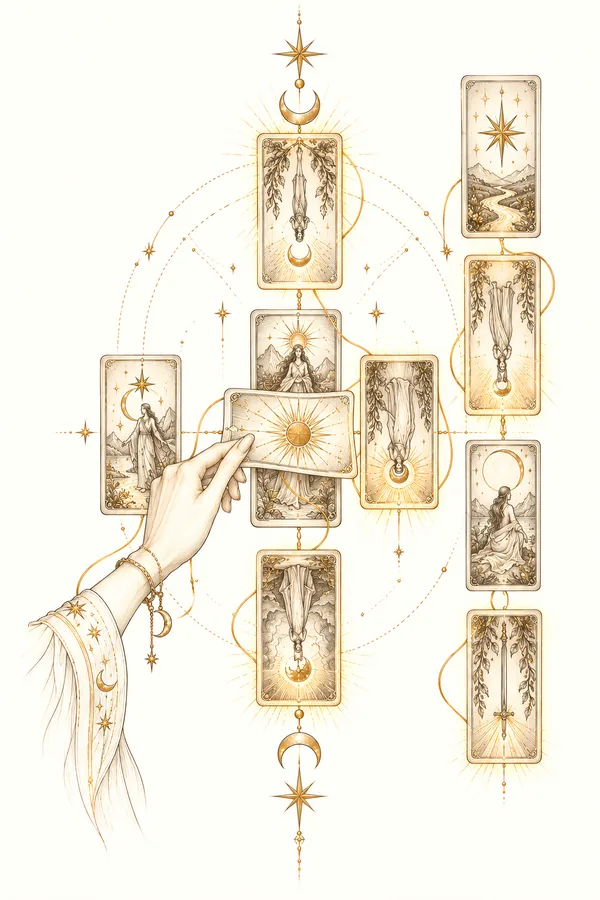
How to Read Reversed Cards in a Celtic Cross Reading
Reversed cards in a Celtic Cross reading: how to choose a reversal method, read all ten positions, spot clusters and avoid common mistakes.
Read the article
October 31, 2026
Celtic Cross Position 9: Hopes and Fears
Celtic Cross position 9: the card that holds hope and fear at once. How to tell which is speaking, and the question that separates them.
Read the article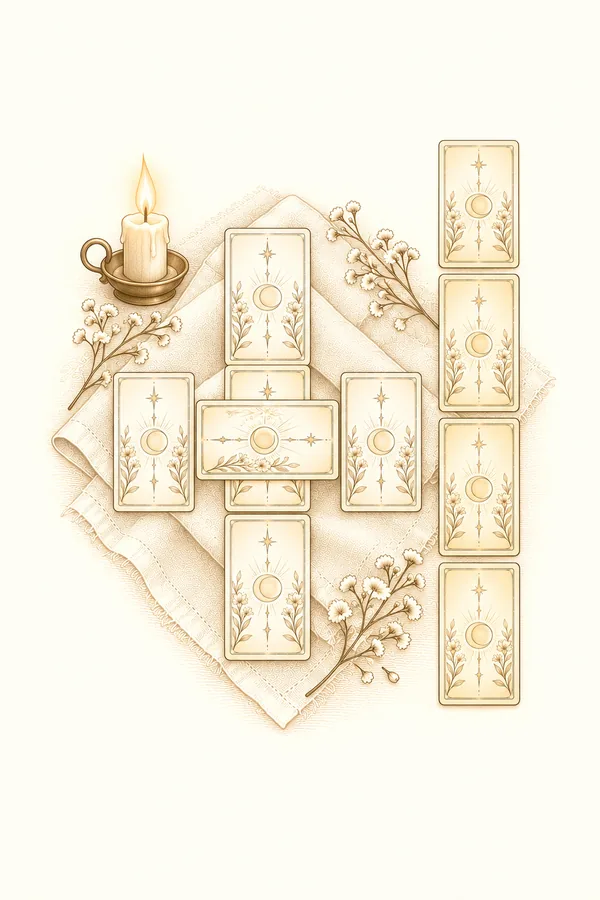
October 31, 2026
Celtic Cross Position 1: The Present Card
Celtic Cross position 1: the heart of the matter, the significator debate, and how card 2 rewrites what you read here. With Rider-Waite examples.
Read the article