November 7, 2026
Page of Cups Feelings as a Person
Page of Cups as a person and as feelings: the shy, tender energy behind the card, what they are not saying, and how to read it in a spread.
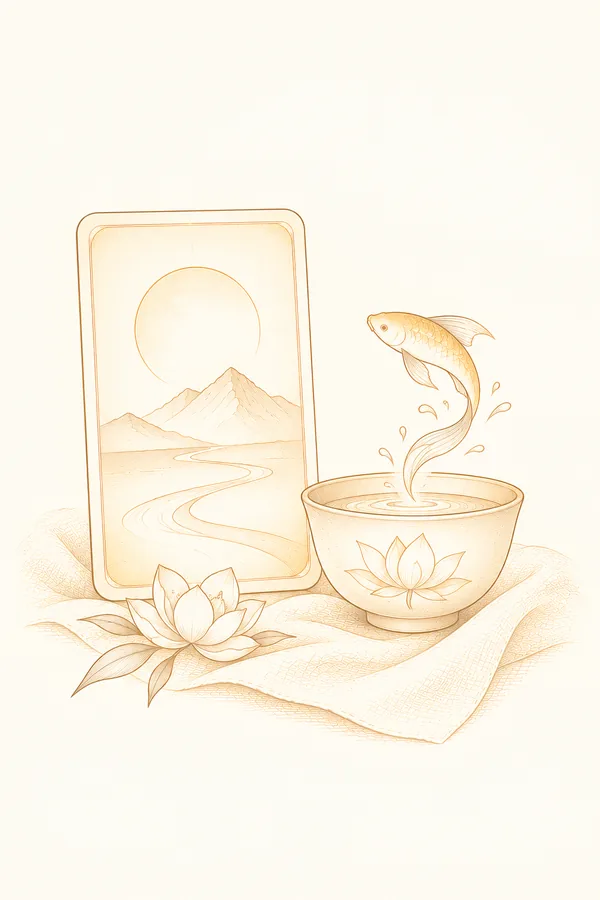
The Page of Cups is the water-element messenger of the tarot court: a youthful figure who leads with feeling, imagination, and innocent curiosity. In the Rider-Waite-Smith deck, this Page stands by the sea in a flowered tunic, holding a cup from which a fish peeks out — an image that captures the card’s essence perfectly. The sea is emotion, the fish is surprise, and the youth’s open, wondering gaze is the heart of the Page’s character. When this card appears in a reading, it signals a person (or a way of feeling) that is tender, receptive, and quietly imaginative rather than forceful or guarded.
This article addresses the real questions behind two common searches: “Page of Cups as feelings” and “Page of Cups as a person.” What does someone embodying this card actually feel? How do they express it? And how do you recognize them in a spread — whether they represent a love interest, a friend, or a part of yourself? We’ll explore the emotional landscape of this court card and its place within the Cups family, whose Pages, Knights, Queens, and Kings all speak the language of the heart. By the end, you’ll know how to read the Page of Cups as a person with confidence and nuance.
The Young Heart of the Court: Meet the Page of Cups Personality
The Page of Cups is the youngest face in the watery court, and that youth is the whole point. If the Queen of Cups is emotional mastery and the King is feeling held with mature authority, the Page is feeling in its first bloom — dreamy, unguarded, and not yet entirely sure what to do with the tide inside them. Picture someone who leads with the heart because they haven’t learned any reason not to.
Core Traits of the Page of Cups Personality
- Sensitivity: They feel everything at full volume — a kind word lands deeply, and a careless one lingers for days.
- Romantic openness: They fall in love with people, ideas, and possibilities quickly, often before they’ve checked whether the feeling is returned or wise.
- Empathy: Genuinely moved by others’ emotions, they listen without armor and absorb the room’s mood like a sponge.
- Imagination: A rich inner world is their natural habitat; they think in metaphors, stories, and daydreams.
- Playfulness once comfortable: Shy at first, they become delightfully silly and inventive when they trust you.
First Bloom, Not Yet Mastery
The Page’s emotional youth is exactly what distinguishes them from the Queen and King of Cups. The Queen has learned to hold feeling without drowning in it; the King channels emotion with steadiness. The Page is still learning that feelings don’t have to be acted on immediately — that intuition deserves a moment’s reflection. Where the mature Cups regulate, the Page simply feels. That vulnerability is both their charm and their growing edge: an emotionally honest beginner, eager to love, easily hurt, and quietly learning the difference between a feeling and a fact.
Rider-Waite Symbolism That Reveals the Inner World
The Page of Cups is often read as a bearer of emotional news, but when this card stands for a person, its Rider-Waite imagery works like a character sketch. Each visual detail is a personality note, not decoration.
The Cup and the Fish
The Page holds an ornate cup from which a fish peeks out. In character terms, this is the person who surprises you with an unexpected emotional offer—a sudden compliment, a quirky idea, a message from somewhere deep. The fish rises from below, suggesting feelings that surface from the unconscious before the Page has words for them. Expect someone whose inner life is more inventive than their shy exterior suggests.
Water, Shore, and Sky
The blue water and seashore speak to tidal moods and strong intuition—this person feels things in waves. The grey sky above hints at shyness, a tendency to keep their emotional weather private until trust is established.
The Floral Tunic
The flowered tunic marks softness and artistry: a gentle, creative soul who processes life through imagination and imagery rather than hard logic.
Read together, these symbols describe an imaginative, tender, emotionally surprising person—still learning to express the depths they carry.
Page of Cups as Feelings of a Love Interest (Upright)
When the Page of Cups appears in a feelings position, it describes someone in the early, tender stage of a crush. This is not settled love — it is a budding, curious affection full of butterflies. The person is charmed by you, perhaps a little smitten, and often slightly bashful about it. Their feelings are genuine but new and unformed, more “you’ve caught my attention in a lovely way” than “I’m ready to commit.” Expect romantic curiosity, sweet gestures, and a certain dreamy quality to how they think about you.
What This Energy Often Means
Because the Page is a messenger, this card usually signals feelings that precede action, not follow it. They may be working up the courage to say something, testing the waters, or simply enjoying the flutter of early attraction.
Example Spread: Them / You / Potential
- Them: Page of Cups — they are charmed and quietly smitten.
- You: The Star — hopeful, open, perhaps idealizing slightly.
- Potential: Two of Cups — mutual affection with real room to grow.
Read it as an invitation: warm, sincere feelings that are still finding their words.
Page of Cups as Feelings – Reversed or Ill-Dignified
When the Page of Cups turns up reversed or ill-dignified in a feelings reading, the tender dreamer becomes the elusive romantic. This person feels deeply but expresses it unevenly: moody withdrawals, sudden enthusiasm that evaporates, or sweet words that never quite become action. The water of the Page can turn murky—emotion pooling into self-pity, escapism, or infatuation with the idea of love rather than its daily work.
Shadow Expressions
Watch for emotional immaturity dressed as sensitivity: sulking instead of speaking, flakiness the moment feelings get real, or chasing novelty when a connection asks for substance. In an ill-dignified position beside harsher cards—the Devil, the Five of Swords—this energy sharpens into mixed signals, guilt-tripping, or romantic fantasy deliberately kept detached from commitment. Affection becomes a bargaining chip rather than a gift.
Before You Conclude
Distinguish a temporary slump from a persistent pattern. Everyone has off weeks; the reversed Page becomes a warning only when evasiveness, moodiness, or fantasy-over-reality repeats across contexts and conversations. Ask what they do when feelings get real, not just how they describe them—and let consistent behavior, over time, be your final card.
As Feelings for You: What Their Heart Is Doing
When the Page of Cups turns up as someone’s feelings for you, the question shifts from “what do they feel?” to “how do they see me?” The answer: refreshing. This person experiences you as a muse — someone who stirs curiosity, softens their guard, and makes feelings feel safe to name. You are easy to open up to, and they may surprise themselves by saying more to you than they intended.
The Idealizing Heart
The Page is young water: feeling arrives before vocabulary. Expect them to idealize you from a distance before daring to speak. They may rehearse conversations, notice small things about you, and build a private version of you in their imagination. Reversed or in a naive light, this reads as sweet but hard to read — affectionate one moment, bashful the next, never quite landing the confession.
Reading It in Context
For “What do they feel for me?”, treat their position in the spread as the volume dial. In the present or future position, expect feeling to surface soon, perhaps clumsily. In the past or as an obstacle, it marks an infatuation they haven’t matured — admiring you without acting. Paired with the Ace or Two of Cups, the crush is real and growing. Beside the Hermit or Four of Cups, they feel it privately and may never say.
Who Is the Page of Cups as a Person: Gentle Messenger or Moody Dreamer?
The Page of Cups as a person carries both faces of the archetype. On one side stands the gentle messenger: the friend who sends a song lyric that reminds them of you, the coworker who leaves a kind note after an argument, the partner who apologizes with a hand-drawn card. This Page brings compliments, creative surprises, and soft-spoken honesty — emotional gestures over grand declarations.
On the other side waits the moody dreamer: someone who writes poetry at midnight, then disappears for a week. They feel everything deeply but share it selectively, retreating into fantasy when reality gets loud. One day they’re warm and playful; the next, distant and absorbed in their own inner world.
Spotting the Page in Real Life
Behavioral snapshots make identification easier:
- Sends a song with “this made me think of you.”
- Writes poetry, then won’t read it aloud.
- Goes quiet after a meaningful conversation, processing alone.
- Offers earnest, slightly naive apologies — and means every word.
Beginner-Friendly Questions to Ask the Card
- Is this person’s sweetness genuine, or am I seeing only their charm?
- Am I dealing with a tender messenger or an escapist?
- How can I receive their emotional offering without over-reading it?
The Page rarely hides malice — only depth.
Page of Cups Attachment Style and the Energetic Connection
The Page of Cups feels like the person who texts back instantly and then rereads your reply three times looking for hidden meaning. In attachment terms, this energy leans anxious or anxious-avoidant: hungry for closeness, quick to feel slighted, and prone to over-reading signals that may not exist. A delayed response isn’t a delay — it’s a story. Yet the same sensitivity that makes them easy to hurt makes them disarmingly open; they’ll say the tender thing first, then watch your face with hopeful eyes.
The Connection They Create
With a Page of Cups in the emotional driver’s seat, the energetic link between you becomes playful, empathetic, and unusually porous. Feelings move across it fast — their mood reaches you before they’ve explained it. Partners often describe it as charming and a little exposing: you feel seen, sometimes before you’ve chosen to be. Their eagerness can feel like warmth or like pressure, depending on your own attachment wiring.
What It Feels Like to Love Them
Expect a bond that’s imaginative and affectionate, with occasional emotional weather. Reassurance lands deeply with this type; silence does not. The gift of the Page of Cups is a connection so alive it invites you to feel more — the challenge is helping them trust that the feeling is mutual without needing to decode every ripple.
When You Are Single and Looking: The Page of Cups in Your Reading
When the Page of Cups appears in a single person’s reading, treat it as a mirror rather than a message about someone else. This card is asking: are you still open? The Page is the receptive one — curious, a little dreamy, willing to be delighted. As a feelings card, it describes someone who leads with tenderness and hasn’t yet learned to guard it. That’s your invitation.
Stay Open, Say Yes
Practically, this is a nudge to accept the invitation, answer the message, linger in the small romantic moments. Let yourself be a little silly — send the earnest text, admit you like the song, wear the thing. The Page doesn’t strategize; it feels. If you’ve been treating dating like a chess match, this card asks you to put the pieces down.
Tarot Prompts and a Spread
Try these journaling prompts:
- Where am I invited to show vulnerability?
- What would “beginner’s mind” look like on a first date?
- What delight am I dismissing as unimportant?
In a love-focused muse / offer / next-step spread, the Page in the muse position shows what draws people to you — your freshness, your openness. In offer, it’s a small, sincere gesture, not a grand one. As next step, it’s simply: initiate gently.
A Beginning, Not a Wedding
Remember the Page is beginning energy — first-date energy. It signals curiosity and early affection, not commitment. Enjoy it for what it is: a door cracking open.
Page of Cups in a Relationship Breakdown and as Potential Outcome
The Page of Cups as a person in feelings is tender, sincere, and emotionally unguarded—which makes a relationship breakdown especially revealing. In hard moments, this figure often shows up as the one who offers an apology with real feeling behind it, or who makes a soft reconciliation attempt: a heartfelt message, a small gesture, a vulnerable “can we talk?” They feel first and think second, so their repair attempts are genuine even when clumsy.
Upright: The Young-Hearted Repairer
Upright, the Page can also be a partner too emotionally young to handle conflict well—well-meaning but easily overwhelmed, retreating into hurt rather than staying at the table. As an outcome, this Page usually signals a fresh start: feelings reset, curiosity returns, and the relationship gets a childlike second chance.
Reversed: Emotional Ghosts and Sulking
Reversed, watch for emotional ghosts—old wounds resurfacing, sulking instead of speaking, or childish blame that dodges accountability. As an outcome here, the Page delivers a lesson rather than a reunion: emotional immaturity must be outgrown before anything real can rebuild.
Surrounding Cards Refine the Verdict
- The Tower: the breakdown is genuine and the Page’s softness is a fragile first step, not a fix.
- Two of Cups: reconciliation is mutual and promising—the apology lands.
- Ten of Cups: the fresh start has long-term emotional weight, though it still needs tending.
Angelic Love Tarot Ritual for Showing Vulnerability in Love
The Page of Cups feels as a person who leads with an open, slightly naive heart—tender, curious, easily moved. This ritual channels that energy into a simple practice of journaling plus tarot. It supports honesty; it does not guarantee any outcome.
Set the Space
Light a candle and take three slow breaths. Hold your deck and name your intention: “Show me what I feel, and what I can safely share.”
Write the Confession
On paper, finish the line: “What I really feel is…” Write without editing. This is the Page’s cup held out—unpolished but sincere.
Two-Card Draw
Shuffle and draw two cards, laying them side by side:
- Left card — What I feel: the emotion beneath your words.
- Right card — What I can safely share: how much, and how, to reveal it.
Reflect, Then Act
Journal one sentence per card. If the right card feels cautious, honor it—vulnerability can be gradual. With any deck, let the Page remind you that tenderness is a strength, not a risk to be eliminated.
Romance Is Not Dead – A Page of Cups-Inspired Love Tarot Spread
The Page of Cups feels as a person like a hopeful romantic: imaginative, tender, a little awkward, and always listening for the fish that speaks. This five-card spread, The Fish in the Cup Spread, channels that energy into a reading for love.
The Positions
- Dream – What they imagine love to be. Their romantic fantasy, ideal, or secret wish.
- Fish – The unexpected offer. A surprise message, gesture, or person arriving outside their plans.
- Cup – What they hold in their heart. Their real, guarded feeling beneath the fantasy.
- Sea – Emotional undercurrents. Fears, nostalgia, or intuition swirling below the surface.
- Page – The next step. How they will express or act on what they feel—often small, sincere, and brave.
Reading It
Use the Dream and Fish cards to see how imagination meets reality; the Cup and Sea show what is felt versus what is hidden; the Page reveals the move they are likely to make. For self-readings, speak gently to your own inner Page—notice where hope outruns evidence. For readings about a love interest, read the Dream and Fish as their imagination and their offer, keeping the Page as their likely next gesture.
Keep the tone playful: this spread rewards curiosity, not certainty.
Recommended tool
Explore the Arcana
Browse the 22 Major Arcana and their meanings.
Keep reading
More on Individual Cards

October 27, 2026
Queen of Cups Feelings in Love: What She Hides
Is it love or compassion? How the Queen of Cups feels, what she won't say out loud, and the cards that prove whether the feeling is mutual.
Read the article
October 23, 2026
Eight of Cups Love Meaning: Walking Away, Explained
The Eight of Cups in love: leaving a relationship that no longer fulfils you, upright vs reversed, feelings, advice and past-present-future.
Read the article
October 23, 2026
Three of Cups Love Meaning: Joy, Friendship, Third Parties
The Three of Cups in love, upright and reversed: celebration and friendship, singles, the cheating question and what it means as feelings.
Read the article